

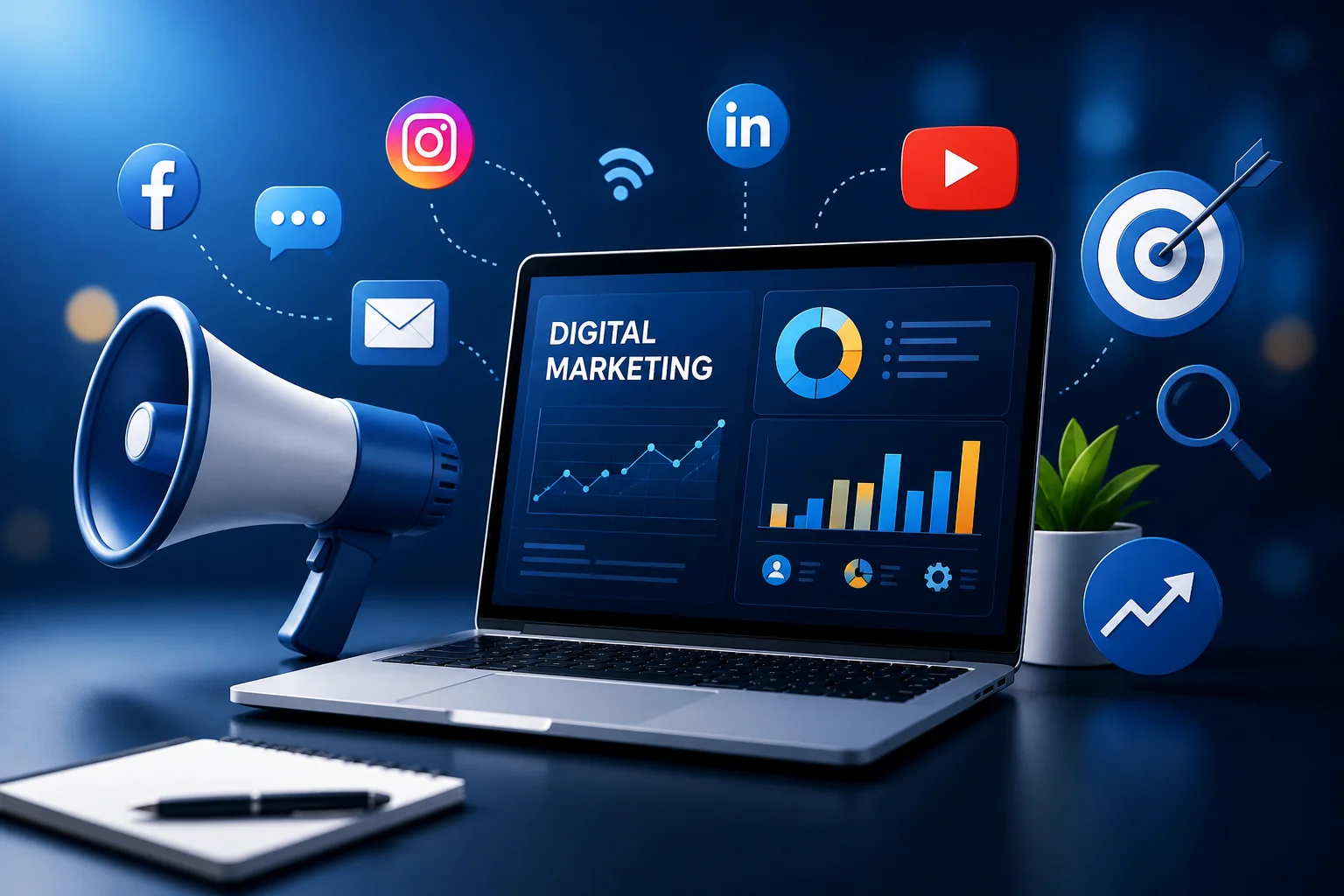
Digital marketing focuses on lead and traffic generation and sales through various channels such as paid ads, SEO, and content marketing. Digital transformation, on the other hand, involves integration of technology, data, and automation in the business process to improve efficiency and scalability. When it comes to digital marketing vs. digital transformation, modern businesses generally need digital marketing for growth and digital transformation for operational success.
Digital marketing involves strategies that help attract and convert customers through various online channels like social media, search engines, and advertising. Digital transformation is the process of digitizing accompany through technology, automation, and data-driven systems. A majority of organizations implement both, to drive demand at first and then scale efficiently.
Comparison Table – Digital Marketing and Digital Transformation
Check this comparison table to understand the difference between digital marketing and digital transformation:
Feature | Digital Marketing | Digital Transformation | Best For |
Goal | Lead generation and customer acquisition | Efficiency and innovation for businesses | Growth vs. scalability |
Focus | Marketing channels and campaigns | Entire business operations and processes | Marketing vs. operations |
Tools | SEO, Ads, Social Media, Content Marketing | CRM, ERP, AI, Automation, Analytics | Tactical vs. strategic |
Timeline | Short-term results | Long-term organizational change | Quick wins vs. long-term impact |
Impact Area | Sales and brand visibility | Company wise productivity | Marketing vs. infrastructure |
What is Digital Marketing and Digital Transformation?
Digital Marketing
For any business a digital marketing strategy leverages online channels to promote brands, businesses, and products. The aim is to attract potential customers, generate leads, and convert them into buyers.
Here are the common digital marketing services:
- SEO
Search Engine Optimization helps improve a website’s visibility on search engines like Google. The techniques include keyword research, content optimization, and creation of backlinks to rank higher in search results. Effective SEO helps businesses attract traffic, increase online visibility, and generate consistent leads.
- PPC
Pay-Per-Click or PPC refers to a digital advertising on search engines and social media model where businesses pay each time a user clicks on their advertisements. It helps drive targeted traffic, generate leads quickly, and improve brand visibility.
- Social Media Marketing
Social media marketing involves brand, product, or service promotion through platforms like Facebook, Instagram, and LinkedIn. it helps businesses connect with their audience, build brand awareness, and drive engagement.
- Email Marketing
Email marketing is a prominent digital marketing strategy through businesses communicates with existing and prospective customers through targeted emails. It helps build relationships, nurture leads, and improve conversions.
- Content Marketing
Content Marketing focuses on the creation of valuable content such as blogs, videos, and guides, and sharing them to attract and engage audiences. It helps build trust, improves brand awareness, and generates leads over time.
An effective digital marketing strategy delivers measurable results through analytics, making it easier to track traffic, engagement, and conversions.
Digital Transformation
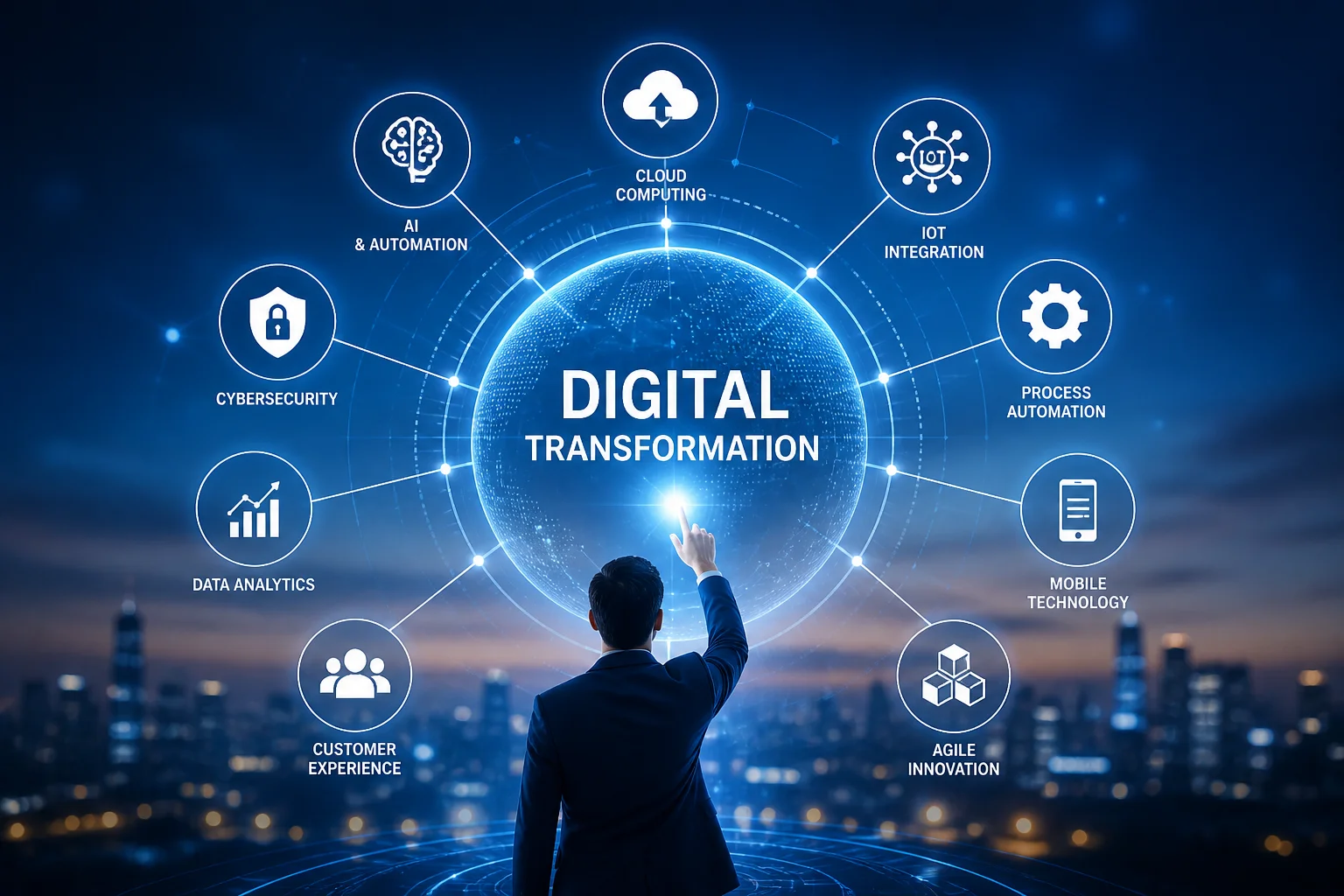
A digital transformation strategy integrates digital technologies into business operations to improve efficiency, innovation, and scalability. It aims to improve internal processes and the overall business performance.
Here are the common digital transformation services:
- CRM
Customer Relationship Management or CRM refers to a centralized system to help businesses manage customer data, track interactions, and organize sales processes. It boosts communication, reinforces relationships and improves efficiency on the whole.
- Automation Tools
Business automation tools help businesses streamline repetitive tasks like email campaigns, lead management, and data entry. They save time, improve efficiency, reduce human errors, and allow teams to focus on strategic activities.
- Data Analytics
Data analytics involves examining and interpreting data to identify patterns, trends, and insights. Businesses use it to make informed decisions, improve performance, optimize marketing strategies, and understand customer behavior.
- Enterprise Resource Planning
Enterprise Resource Planning (ERP) is software that integrates core business processes like finance, inventory, HR, and operations into one system. It improves efficiency, data accuracy, and decision-making across the organization.
Digital transformation also helps businesses streamline operations, reduce manual work, and make better decisions based on real-time data.
Key Differences Between Digital Marketing and Digital Transformation
Here are the key things to know when studying the difference between digital marketing and digital transformation:
1. What is the main goal of digital marketing and digital transformation?
The main goal of digital marketing is acquiring customers. Naturally, it focuses on targeting potential customers through online channels for lead generation and sales.
Digital transformation, on the other hand involves strategies that aims to replenish business operations internally. So, some of the most prominent digital transformation benefits for business are effective processes, improved data management, and scalable systems that support business growth in the long term.
2. How do their Tools and Technologies Differ?
Digital marketing is based on SEO platforms, advertising networks, social media marketing tools, and content management systems that help businesses reach and engage customers online.
Digital transformation tools are oriented towards the internal systems of the business and are based on CRM software, AI, automation platforms, and data analytics. They help businesses manage operations, improve productivity, and make data-driven decisions.
3. Which strategy delivers faster results?
For any business, everything boils down to speed when it comes to achieving results. Naturally when it comes to digital marketing vs. digital transformation, they would be keener to choose an option that delivers faster results.
Digital marketing delivers faster results. For instance, paid advertising campaigns helps generate leads and traffic within weeks.
Digital transformation takes longer as it involves changing of processes, training internal teams, and implementing new technologies. However, once everything is accomplished, a business can reap operational benefits for many years.
4. Which one is more beneficial for long-term growth?
Digital transformation is undoubtedly better for long-term growth in operations as it boosts efficiency, scalability, and decision making.
However, digital marketing is indispensable as it helps businesses get a steady stream of new customers.
No wonder, companies combine both strategies in the right mix to achieve success.
Who Needs What?
Many businesses struggle to decide whether to invest in digital marketing or hire the best digital transformation agency. Well, the right choice is based on business goals and current challenges:
You need to choose digital marketing strategies when:
- Your business needs more leads and customer traffic
- You are launching a new product or service
- You want to increase brand visibility online
- You are a startup or growing business trying to expand your market reach
Digital marketing helps businesses grow their audience and generate demand quickly.
You need to choose digital transformation strategies when:
- Your operations are inefficient or heavily manual
- You struggle to manage leads or customer data
- Your teams spend too much time on repetitive tasks
- You want to scale operations without increasing costs dramatically
Digital transformation helps businesses operate more efficiently and manage growth effectively.
You need to choose both when:
- You want both growth and operational efficiency
- Your business is scaling rapidly
- You want better customer experience and internal systems
- You aim to build a long-term competitive advantage
Combining both strategies allows businesses to attract customers and manage them effectively.
When to Use Digital Marketing and Digital Transformation Together?
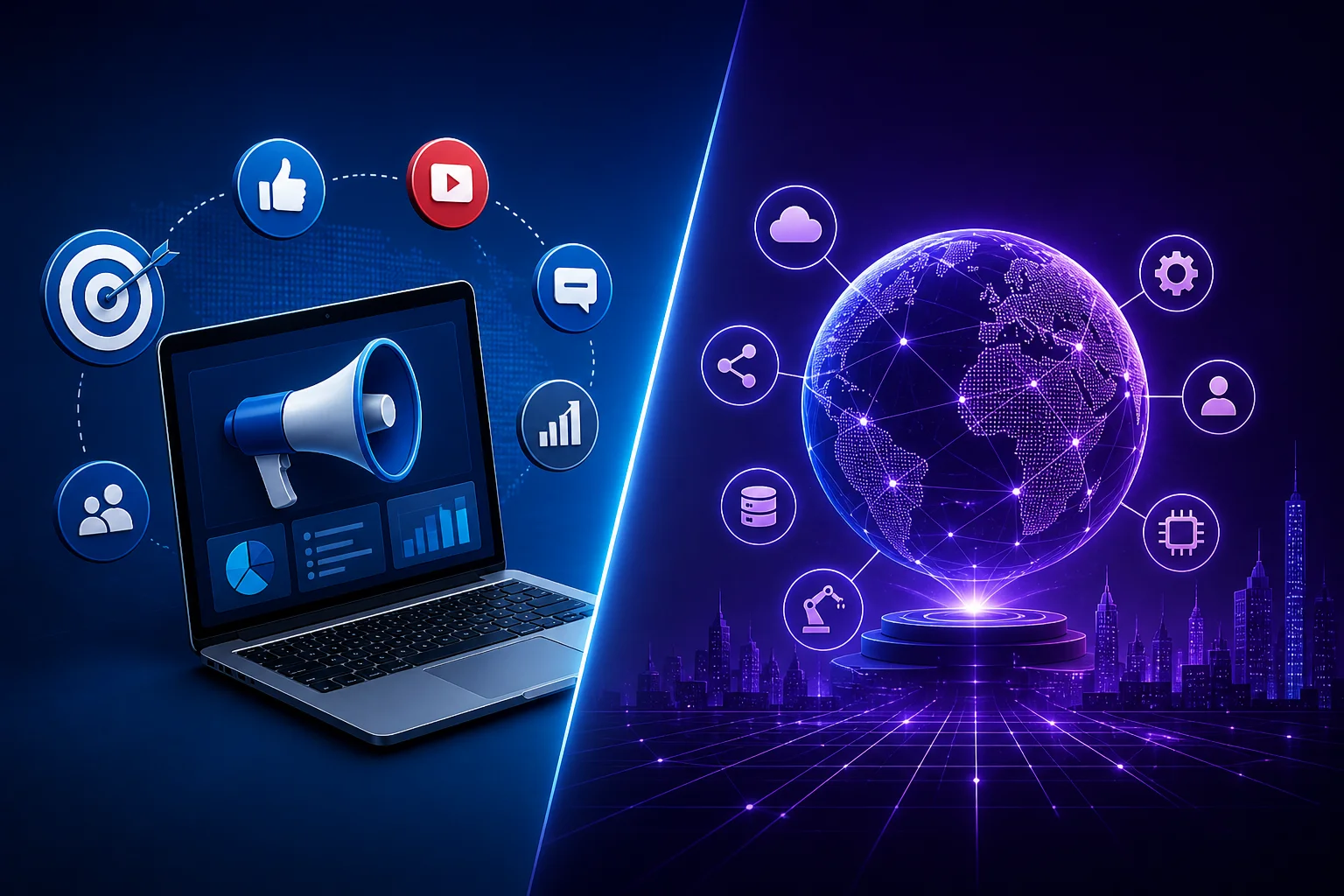
Digital marketing and digital transformation work best when used together. Marketing generates interest and attracts customers, while transformation ensures the business can manage and scale that demand effectively.
For example, digital marketing campaigns might generate hundreds of leads each month. Without proper systems in place, managing those leads can become chaotic.
By implementing CRM systems and automation tools, businesses can organize leads, automate follow-ups, and track customer interactions. This improves conversion rates and customer satisfaction. Here are some real world uses cases:
A mid-sized company offering services may use online advertising extensively for lead generation; now let’s see how things look at the outset:
- The company is investing heavily on digital marketing tools like advertisements and content marketing. Although these campaigns generate traffic and inquiries, the manual acts of the sales team to track those leads through spreadsheets leads to major losses of leads due to poor work and slow follow-up.
- Once the company decides to invest in digital transformation through AI and automation tools and CRM, every lead can be well attended to and automated email responses sent instantly.
Here are the results:
- Faster response times
- Better lead tracking
- Higher conversion rates
- Improved marketing ROI
By combining digital marketing with digital transformation, the company significantly improved its sales performance.
Common Mistakes Businesses Make
Businesses misunderstand the relationship between digital marketing ad digital transformation resulting in costly mistakes:
- Focusing on Digital Marketing
Some businesses invest heavily in advertising and SEO but ignore internal systems. As a result, they generate leads but fail to manage them effectively.
- Investing in Technology without Strategy
Businesses often adopt multiple software tools without a clear strategy. This creates fragmented systems that do not integrate well, reducing efficiency instead of improving it.
- Expecting Instant Results
Digital transformation requires planning, implementation, and employee training. Businesses that expect immediate results may become frustrated and abandon the process too early.
- Ignoring Data and Analytics
Data is one of the biggest advantages of digital technologies. Businesses that fail to analyze customer data miss opportunities to improve marketing campaigns and operational efficiency.
Data is one of the biggest advantages of digital technologies. Businesses that fail to analyze customer data miss opportunities to improve marketing campaigns and operational efficiency.
How to Combine Digital Marketing and Digital Transformation?
Businesses that successfully combine marketing and transformation follow the below-mentioned strategies:
- Beginning with Lead Generation
The best way to begin is implementing digital marketing strategies such as paid ads, SEO, and content marketing to attract customers. Eventually, the goal is to attract a steady stream of leads.
- Implement a CRM
Once the leads arrive, you can implement a CRM system to track interactions, store customer data, and manage sales pipeline effectively.
- Automate Follow-Ups
With business automations tools, it’s easier to send welcome emails, reminders, and personalized messages to the leads. That way, you can be sure that no lead is lost and also reduce manual work for teams.
- Use Data to Optimize Performance
Analytics tools help businesses understand which campaigns generate the best results. By analyzing this data, companies can refine their marketing strategies and improve conversion rates.
- Integration of Systems Across Organizations
To bring digital transformation to effect, systems such as CRM, marketing automation, and analytics platforms should work together seamlessly. Integration improves data accuracy and decision-making.
Why Is Digital Marketing Becoming Essential for Businesses?
Organizations are prioritizing digital transformation due to these emerging trends:
- Artificial Intelligence Adoption
AI tools help businesses automate customer service, analyze data, and personalize marketing campaigns. These capabilities improve efficiency and customer experience.
- Increased Demand for Automation
Companies need to operate faster and more efficiently. Automation reduces manual tasks and allows employees to focus on higher-value work.
- Data-Driven Decision Making
Modern businesses rely on data to guide strategies. Digital systems collect and analyze large volumes of data, helping organizations make more informed decisions.
- Changing Customer Expectations
Customers expect fast responses, personalized experiences, and seamless interactions across multiple channels. Digital transformation enables businesses to meet these expectations.
Conclusion
Digital marketing and digital transformation serve different but complementary roles in modern business strategy. Businesses that focus only on marketing may struggle with operational inefficiencies, while those that focus only on transformation may lack customer demand. So when it is digital marketing vs. digital transformation, the most effective approach is combining both strategies.
Looking to boost leads, improve efficiency, and scale your business online? Carney Technologies Services, the best digital transformation agency offers tailored digital marketing and transformation solutions designed to help your business grow faster. Visit https://www.carneytechnologies.com/, to start building a stronger digital future.
Frequently Asked Questions
What is the difference between digital marketing and digital transformation?
Digital marketing focuses on attracting and converting customers through online channels such as search engines, social media, and advertising. Digital transformation focuses on improving business operations through technology, automation, and data-driven systems.
Which is better for small businesses?
Small businesses often benefit from starting with digital marketing because it generates immediate visibility and leads. As the business grows, digital transformation becomes important to manage operations efficiently and scale sustainably.
Can digital transformation replace digital marketing?
No, digital transformation improves internal operations, while digital marketing attracts customers. Both serve different purposes, and most businesses need both to achieve sustainable growth.
How long does digital transformation take?
Digital transformation can take several months or even years depending on the size of the organization and the complexity of its systems. It is an ongoing process that evolves as new technologies emerge.
Is digital transformation expensive?
The cost varies depending on the technologies implemented and the scale of transformation. While initial investments can be significant, the long-term benefits often include improved efficiency, reduced operational costs, and better business performance.